
Financial services and lending
Identity workflows in this industry
- Loan applications
- Digital onboarding
- Fraud review
- Risk screening
Create a stronger start to digital onboarding
Financial-services and lending applications depend on accurate identity information at the beginning of the customer relationship. A low-quality document image or incorrectly entered name can create downstream review work and slow an otherwise qualified applicant.
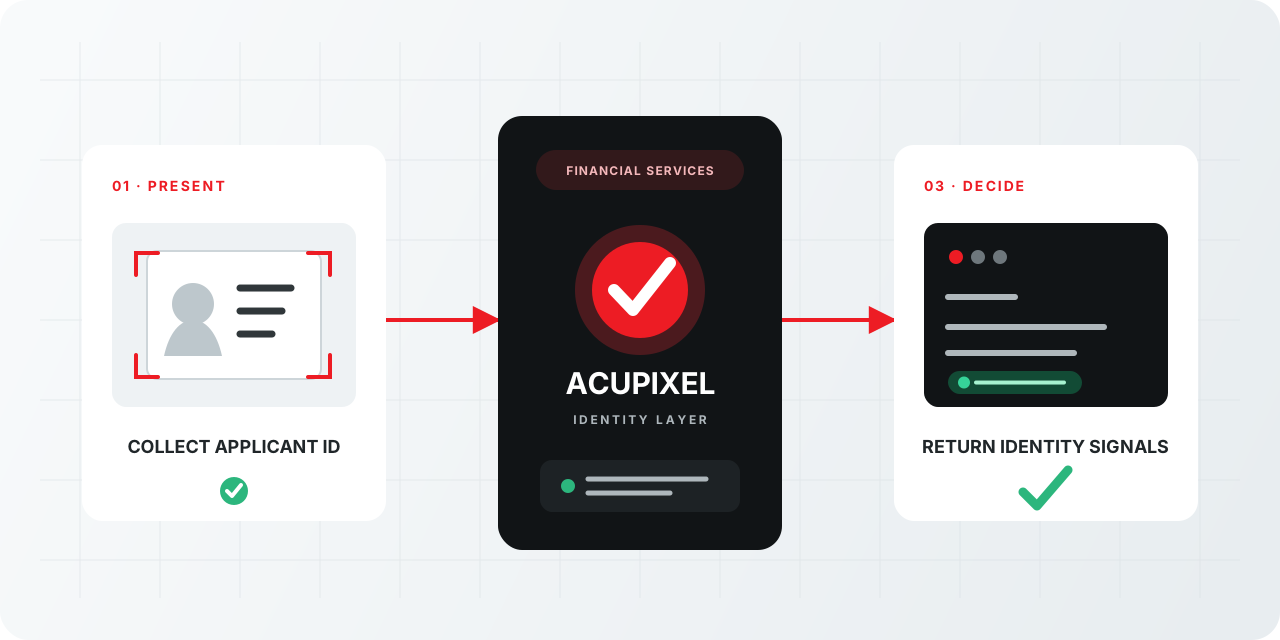
Acupixel can capture structured data from supported credentials and add document, identity and risk signals to the onboarding flow. The lender or platform determines which modules to use and how each result influences its decision process.
By integrating these capabilities into the loan-origination or account application experience, providers can reduce handoffs between separate tools and give operations teams a more coherent record to review.

Layer identity checks without building a monolith
Not every financial transaction requires the same verification path. A new borrower, returning customer, high-value transaction or exception case may need a different combination of document authentication, identity matching and screening.
Acupixel products are modular, allowing a financial software provider to orchestrate the checks that fit each workflow. Document forensic authentication can evaluate the credential, IDV Match can add identity-data signals, and sanctions screening can support a broader risk process.
Each service returns focused results that the host platform can combine with its own policies, customer data and manual review procedures. Acupixel does not make the lending or compliance decision for the business.

Build for cloud, branch and partner-led channels
Financial-services companies often acquire customers through websites, branches, call centers and third-party partners. A reusable identity API can help standardize how documents and verification results enter the platform across those channels.
Remote browser capture can support digital applications, while scanner and local software options can serve staffed offices. The implementation can be phased, beginning with document capture and expanding as product and risk teams define additional needs.
For fintech, lending and financial-platform developers, this creates a flexible identity foundation that can evolve alongside onboarding policies without forcing every customer journey into one fixed sequence.
