
Car rental
Identity workflows in this industry
- Rental counters
- Airport locations
- International renters
- Self-service pickup
Keep the rental line moving
Car-rental teams need to capture driver information accurately while customers are waiting to collect a vehicle. The process becomes more complex at airport counters and high-volume locations where speed matters and document types vary.
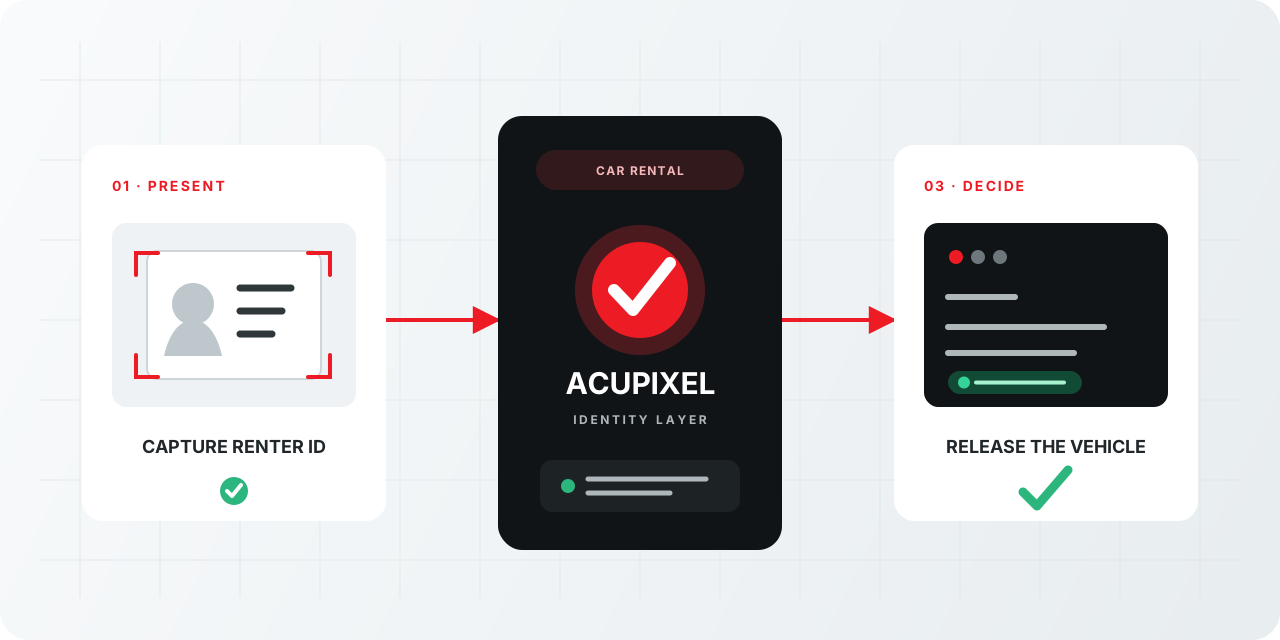
Acupixel document capture can read supported driver’s licences and passports and return structured fields to the rental application. That reduces repetitive data entry and gives the software a consistent starting point for the rental record.
The rental platform can decide which fields to confirm, what information to retain and when an employee should review the document. Acupixel fits behind the customer experience rather than replacing it.

Extend identity checks beyond the counter
Self-service pickup and digital rental journeys shift document capture away from a trained counter employee. The software must guide the renter through a usable image and determine whether additional verification is needed before vehicle release.
Browser-based remote capture can collect a supported identity document without requiring the renter to install an application. Document authentication, identity matching or facial matching can be added as separate modules when the use case calls for stronger signals.
This lets rental technology providers design tiered workflows for reservations, international renters, account creation and unattended pickup while keeping the final rental decision inside their own rules engine.

Use one identity layer across channels
A rental company may operate neighborhood branches, airport counters, kiosks and mobile pickup experiences. Maintaining a different document integration for every channel creates unnecessary complexity for product and operations teams.
Acupixel’s modular platform can support scanner-led, camera-led and remote capture patterns through APIs and local software options. Developers can reuse the same normalized outputs across the channels their rental application supports.
A shared identity layer makes it easier to add new pickup experiences, support more locations and refine review policies without rewriting the core rental-management platform.
